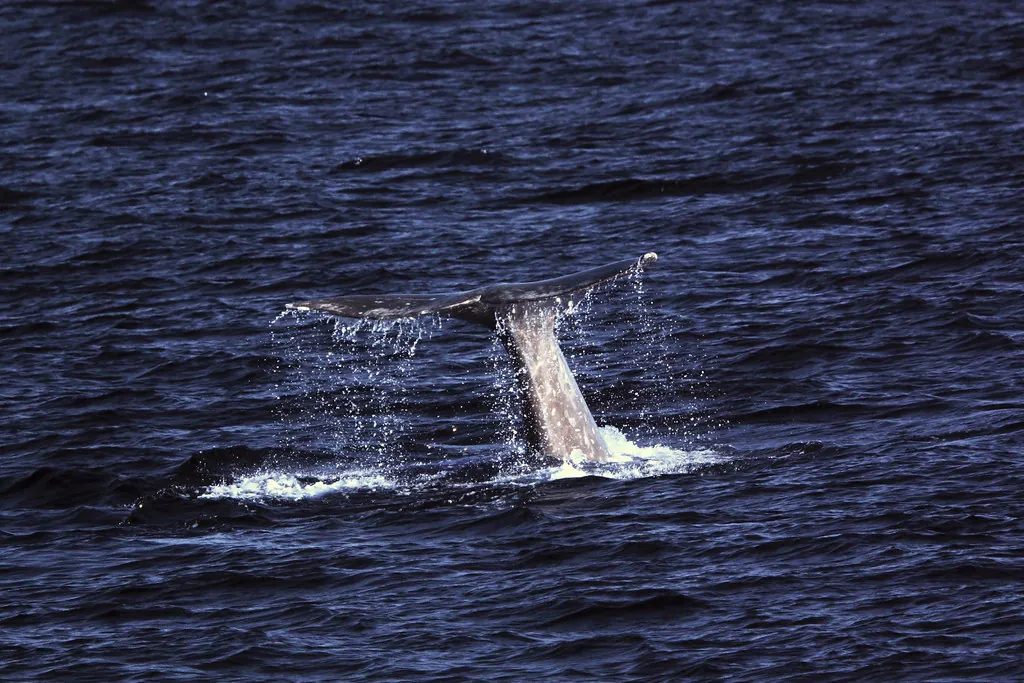
Whale watching in San Diego is mostly a timing game. Every winter, Pacific gray whales swim past Point Loma on their way from the Arctic to the lagoons of Baja California. Show up at the right time and they’re right there. Show up in November and you’re just staring at a very nice ocean.
Here’s when the season actually runs, where to watch from shore for the price of park entry, what a boat tour costs, and what happens if the whales don’t show. Spoiler: one operator gives you another trip.
TL;DR (for people already holding binoculars)
- Best overall: a half-day boat tour in January, the National Park Service’s peak month for the gray whale migration.
- Best budget: the Kelp Forest and Whale Overlook at Cabrillo National Monument, for $20 per car or $10 per person walking in.
- The skip: watching from shore in November or in spring. The whales aren’t here yet, and on the way north they’re usually too far out to see from Cabrillo.
Quick facts
- Season Gray whales late December to mid-March from shore; peak mid-January
- Shore lookout Cabrillo’s Kelp Forest and Whale Overlook, $20 per car
- Park hours 9 a.m. to 5 p.m.; closed Thanksgiving and Christmas
- Boat tours Flagship, 3 to 3.5 hours, from Broadway Pier, mid-December to mid-April
- Guarantee Flagship says no whales means your next trip is free
- Bring Binoculars, warm layers and seasickness medicine if you need it
1. When is whale season in San Diego?
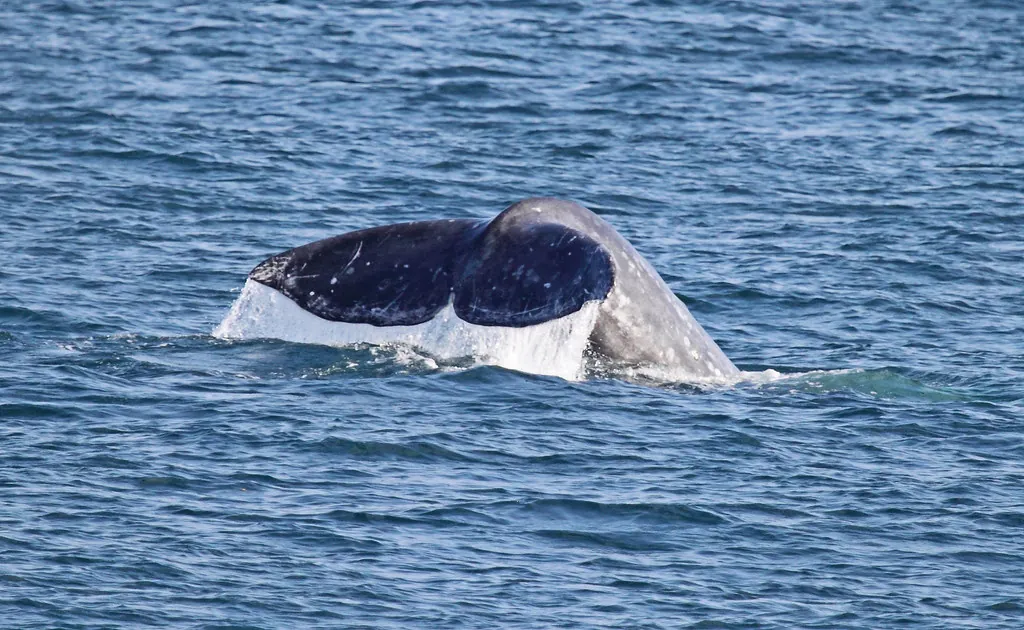
The gray whale is the headliner. NOAA Fisheries says these whales spend summers feeding in the Arctic and winters in the lagoons of Baja California, where calves are born from early January to mid-February. That’s a round trip of about 10,000 miles, so the least you can do is show up on time.
At Cabrillo National Monument, the NPS says whale season runs from late December to mid-March. Its whale page adds that mid-January is the peak, and most whales pass San Diego in late December, January and February.
Tip: if your trip lands in early December, plan on a boat tour or plan on tacos. Our San Diego in December guide has plenty to fill the gap.
2. What about blue whales?
Blue whales are the summer act. NOAA Fisheries calls the blue whale the largest animal on Earth and says eastern North Pacific blue whales likely feed off the U.S. West Coast in summer. City Cruises’ whale watching FAQ says blue whales are more likely seen off San Diego from June to September.
Sightings follow the food, so if a blue whale is your whole plan, check recent sightings before you book.
3. Watch from shore: Cabrillo National Monument
The cheapest seat in the house is at the tip of Point Loma. The NPS says the heights around the park’s Kelp Forest Overlook and the Old Point Loma Lighthouse offer the best viewing. The overlook has benches, shade and exhibits about the migration.
Cost: $20 per private vehicle, or $10 per person on foot or bike, capped at $20 for a group of 4. Kids 15 and under are free, and passes are valid for 7 days. The NPS says credit and debit cards are preferred.
Hours: the park is open daily from 9 a.m. to 5 p.m. It’s closed on Thanksgiving Day and Christmas Day.
Where: 1800 Cabrillo Memorial Drive, at the end of Point Loma. More on the neighborhood in our Point Loma guide.
4. How to actually spot a whale from shore
This part takes patience. The NPS says most whales swim between the kelp beds, about three-quarters of a mile out, and the horizon. Binoculars help a lot.
Look west for the blow, a bushy spout up to 15 feet high that lasts about five seconds. The NPS says a gray whale usually surfaces for 3 to 5 blows, 30 to 50 seconds apart, then dives for a few minutes. The whales are heading south, which is to your left, so scan left for the next spout.
Tip: in spring the whales head north again, but the NPS says they’re generally too far out to see from the park. Shore watching is a winter thing.
5. Cabrillo’s whale festival
The NPS lists Whale Watch Weekend among the park’s annual events, under February. The Cabrillo National Monument Foundation held its 2026 Whale Watch Festival on Saturday, January 10, with exhibitors, crafts and guided whale watching from land.
The 2027 date wasn’t posted when we checked, so watch the park’s special events page.
6. Boat tours: Flagship Cruises
For a closer look, you need a boat. Flagship says it launched the world’s first commercial whale watching cruise in San Diego in 1955. Its tours run 3 to 3.5 hours from Broadway Pier downtown, with departures at 9:30 a.m. and 1:30 p.m. daily in season.
Season: Flagship lists mid-December to mid-April, and says whale watching returns December 12 for the 2026-27 season.
Cost: adults 13 and up are $57.24 on weekdays and $60.42 on weekends, taxes and fees included. Kids 4 to 12 are $42.93 on weekdays and $45.32 on weekends. Flagship is cashless, and prices can change, so check before you go.
Distance: Flagship says early-season whales swim closer to the coast, about 3 to 5 miles out. Northbound whales later in the season can be 9 to 12 miles out, which means more time on the water.
Tip: arrive 15 minutes before departure. The main deck is wheelchair accessible, but Flagship says the top deck and restrooms are not.
7. What if you see no whales?
Flagship’s whale page says: see whales or your next trip is free, with no expiration. That turns a whale-free morning into a rain check instead of a sad boat ride.
Other operators run whale tours too, including City Cruises from downtown. We couldn’t confirm a sighting guarantee on its page, so ask before you book. If a company doesn’t put a guarantee in writing, assume there isn’t one.
8. Seasickness: plan for it
Three hours on the open ocean is not a ferry ride across the bay. Flagship’s own advice is to dress warmly in layers and, if you’re prone to seasickness, consider medication in advance. Take it before you board, since it’s no help still in your bag.
Tip: Flagship says cruises can be cancelled for unsafe weather, so keep your schedule a little flexible.
Is whale watching in San Diego worth it?
In January, yes. A $20 car pass gets you a cliff-top lookout, and a boat tour with a free do-over takes most of the gamble out of it.
It’s less worth it in November or early December, before the whales arrive. And if you’ll spend the whole cruise feeling queasy, the shore lookout is the smarter bet.
Worth-it rating: 4 out of 5 in season. Worth the parking.
FAQ: whale watching san diego
When is the best time for whale watching in San Diego?
Mid-January, says the NPS. From shore at Cabrillo, the season runs late December to mid-March. Flagship’s boat tours run mid-December to mid-April.
Can you see whales from shore in San Diego?
Yes, in winter. The Kelp Forest and Whale Overlook and the Old Point Loma Lighthouse area at Cabrillo National Monument are the park’s top spots. Bring binoculars, since most whales swim well offshore.
How much is whale watching in San Diego?
Flagship lists $57.24 for adults on weekdays and $60.42 on weekends, taxes and fees included. Watching from Cabrillo costs the park entry: $20 per car or $10 per person on foot.
What happens if we don’t see any whales?
Flagship says if you don’t see whales, your next trip is free. Other operators set their own rules, so ask before you book.
Can you see whales in San Diego in November?
Not really. Cabrillo’s season starts in late December, and Flagship’s 2026-27 tours start December 12.
The verdict
Go in January and do both. Spend a morning at Cabrillo’s Kelp Forest and Whale Overlook with binoculars, then book a Flagship tour if you want a closer look, since it comes with a free retry if the whales skip their appointment. In November, save the money and come back in winter. The whales are very punctual about their schedule, even if they ignore yours. Still picking your sand? Our best beaches in San Diego guide sorts them by what you actually want.
Plan the rest of your day
Photo: fortherock, CC BY-SA 2.0, via Flickr