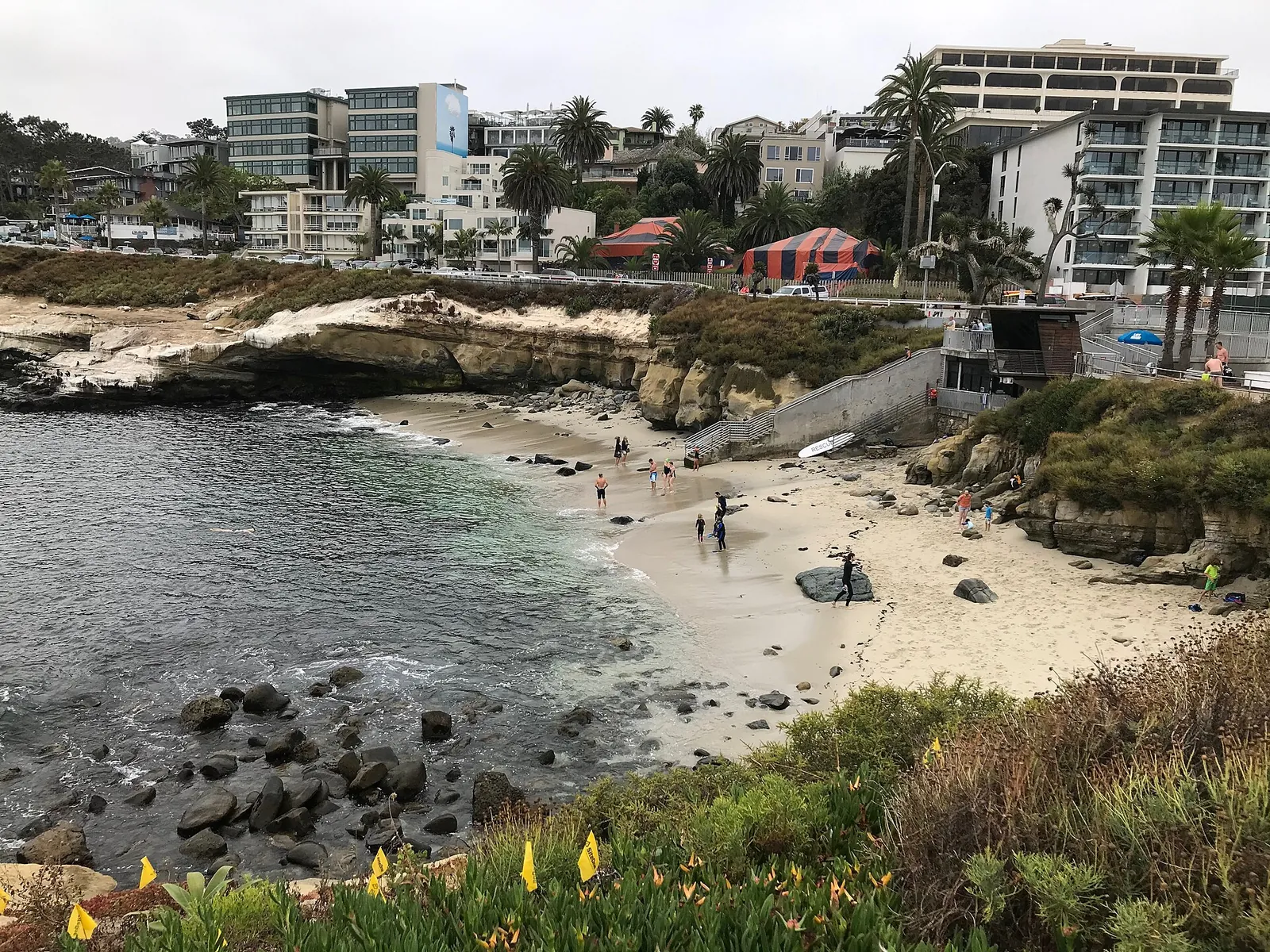
San Diego has a reputation for perfect weather 365 days a year. That’s mostly true, which makes picking the best time to visit San Diego weirdly hard. Every season is pleasant, but each one has a catch: fog, crowds, cold water or hotel prices that make your wallet cry.
So let’s skip the brochure version. Below is the honest season-by-season rundown: air and ocean temperatures, crowds, prices and the stuff nobody puts on a postcard. By the end you’ll know exactly which month fits your trip.
TL;DR (for people with a reservation in 10 minutes)
- Best overall: September and October. The warmest ocean of the year, sunny skies, and summer crowds gone once kids are back in school.
- Best for deals and whales: January to early March. Lower hotel rates and gray whales swimming past Point Loma, with a jacket and some rain.
- Approach with caution: late May through June (gray skies) and Comic-Con week in late July (hotel prices go to the moon).
Quick facts
- Best overall September and October, with the warmest water and thinner crowds.
- Deals January to early March, outside the holidays.
- Whales Late December to mid-March at Cabrillo, peaking mid-January.
- Gray skies Roughly May through June. Pack a hoodie.
- Avoid Comic-Con week in late July, unless you’re attending.
Winter (December to February): Cheap Rooms, Big Whales, Cold Toes
Winter here means daytime highs in the mid-60s. Locals reach for puffer jackets; visitors from Chicago go swimming out of spite. The ocean drops to the upper 50s, so that swim will be short and loud.
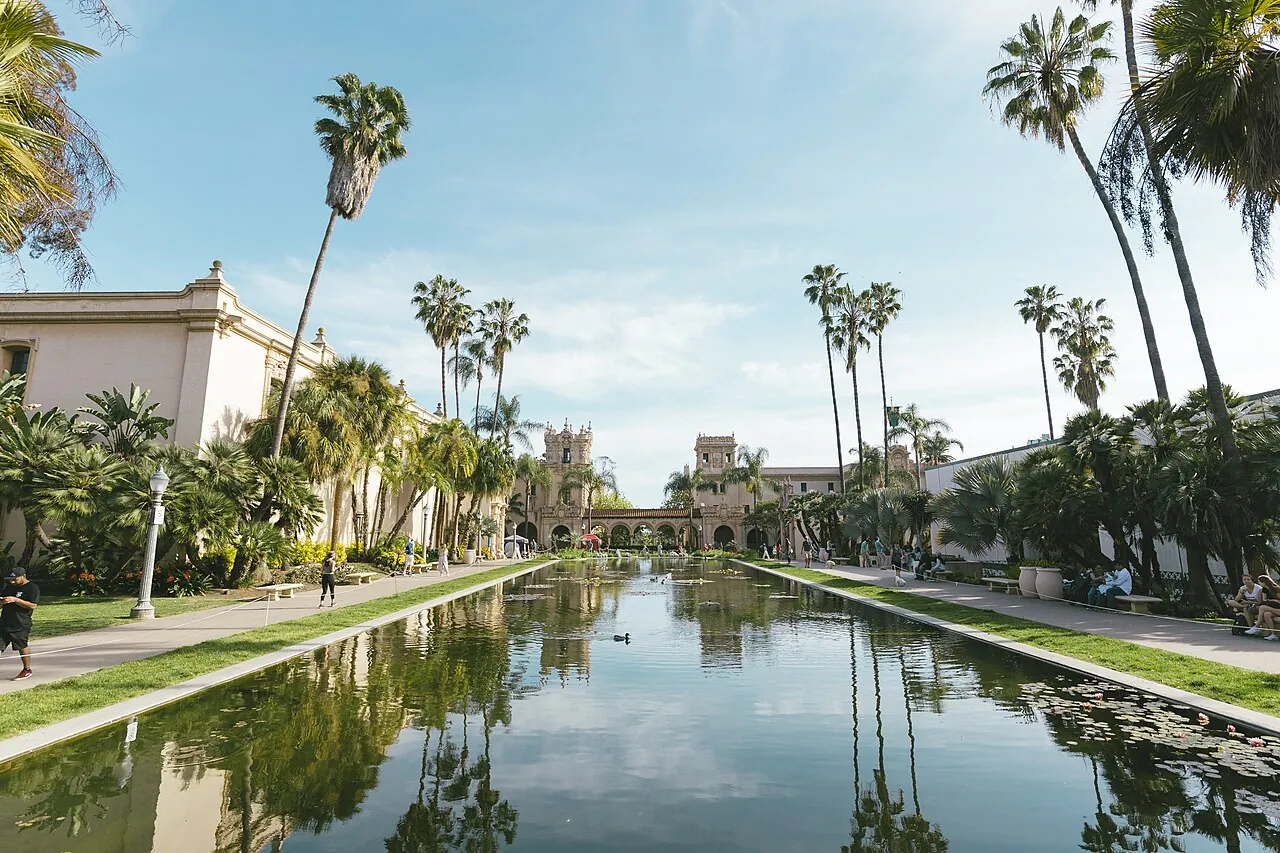
This is the rainy season, but “rainy” is relative. Most of the year’s rain falls between December and March, usually in a handful of storms rather than a constant drizzle. Pack a light rain jacket and a backup indoor plan, like Balboa Park’s museums.
The big winter perk is gray whales. They pass San Diego on their migration to Baja, and the National Park Service says the viewing season at Cabrillo National Monument runs from late December to mid-March, peaking in mid-January. Whale-watching boats leave from the harbor daily in season.
Where: The Kelp Forest Overlook and Old Point Loma Lighthouse at Cabrillo are the park’s best whale lookouts. While you’re there, the Cabrillo tide pools are known for their winter low tides. Tip: Cabrillo charges an entrance fee, and its hours change seasonally, so check before you go. At the tide pools, watch the water and never turn your back on the waves; rocks are slick and sets come in fast.
Deals are real in winter too. Outside the holidays, hotel rates tend to dip, and San Diego Restaurant Week usually lands in late January with fixed-price menus at 100+ restaurants. Dates move each year, so check before you go.
Spring (March to April): The Sneaky-Good Shoulder Season
Spring is San Diego’s underrated middle child. Highs sit in the mid- to upper 60s, the hills are still green from winter rain, and the ocean is creeping into the low 60s. Whales are still around in early March.
The catch is spring break. Late March and early April bring families to the Zoo, SeaWorld and the beaches, so prices and crowds jump for a few weeks. If your dates are flexible, aim for early March or late April, when the only line you’ll stand in is for coffee.
Tip: Spring is ideal for hikes before summer heat bakes the inland trails. Annie’s Canyon in Solana Beach is a short, popular slot-canyon scramble; go early on weekends to beat the crowd at the narrow parts.
May Gray and June Gloom: The Honest Section
Here’s the part the tourism ads crop out. From roughly May through June, a thick marine layer parks itself over the coast. Mornings, and sometimes entire days, look like someone left the sky in the dryer too long.
It happens because the land warms up faster than the ocean in late spring. Cool air over the water gets trapped under warmer air above it, and clouds form along the coast. Some days burn off by lunch. Other days the gray wins and you’re wearing a hoodie at the beach in June.
It’s not a dealbreaker. Temperatures are mild, near 70, and the sun is often shining just a few miles inland. Think of it as beach weather for people who burn easily. Only in San Diego do people complain this much about 68 degrees and slightly gray.
Tip: If the coast is socked in, head inland or uphill. Mount Soledad sometimes pokes above the marine layer, and Balboa Park is usually brighter than the beach. Save sunset plans for later in the trip and hope for a clearing. Tip: Overcast doesn’t mean no sunburn. UV gets through the clouds, so wear sunscreen anyway.
Summer (July to August): Peak Everything
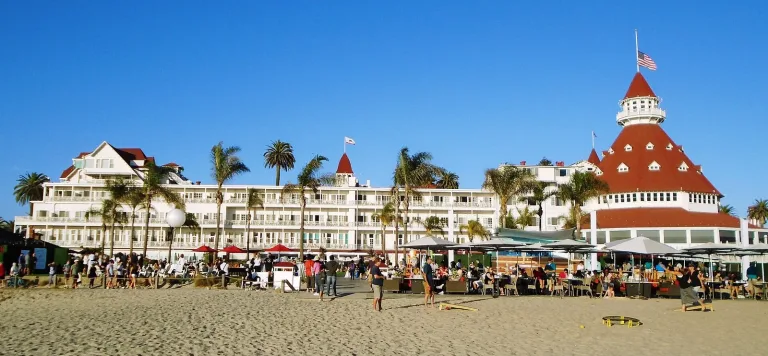
By July the gloom usually clears and San Diego looks like the postcard. Highs run in the mid-70s at the coast, warmer inland, and the ocean climbs into the upper 60s, sometimes touching 70. It’s also when every family in the Western U.S. has the same idea.
Expect full beaches, packed parking lots and the highest hotel rates of the year. San Diego regularly ranks near the top of U.S. cities for summer hotel occupancy. Book early, and treat beach parking like a competitive sport you’ll probably lose.
Tip: Hit the beach by 9 a.m. or after 4 p.m. for easier parking and softer light. Midday, explore shady inland spots like Chicano Park and its murals in Barrio Logan.
### The Comic-Con hotel crunch
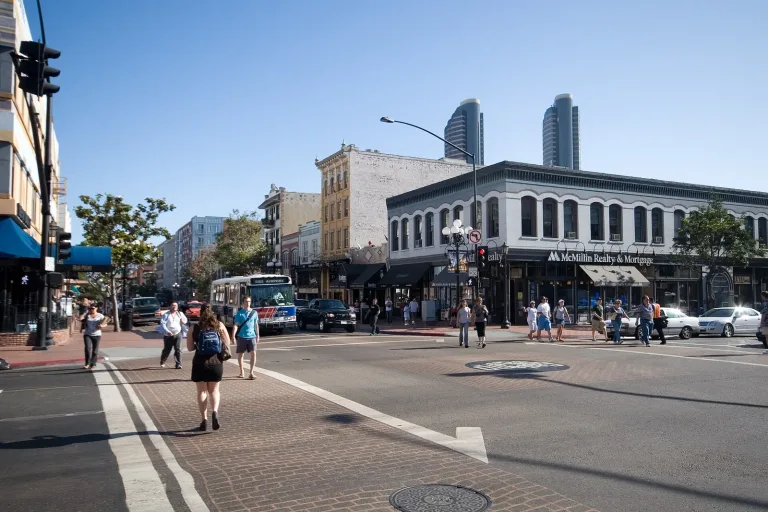
Comic-Con International takes over the Convention Center for 4 days each summer, usually in late July (2026 ran July 23 to 26, with a preview night on the 22nd). Downtown hotel rooms vanish months ahead.
Rates spike hard. Hulk-smash hard. Tourism industry data has shown average room rates running 33% to 44% higher during Comic-Con than the following week. If you’re not attending, avoid that week entirely or stay well outside downtown, because Gaslamp sidewalks become a cosplay parade.
Tip: Check the Comic-Con dates before booking any late-July trip. Showing up by accident is how people end up paying superhero prices for a budget motel.
Fall (September to November): The Local Secret
Here it is: fall is the best time to visit San Diego. The ocean peaks around late summer into early September, often in the upper 60s to low 70s. Highs stay in the mid-70s through September and October, and the marine layer usually takes the season off.
Meanwhile, kids go back to school after Labor Day and the crowds thin out. Hotel rates ease from summer highs, beach parking becomes possible again, and restaurants stop asking you to wait 90 minutes for a fish taco.
October is a family bonus month. In recent years, the San Diego Tourism Authority has run “Kids Free San Diego,” with free kids’ admission and deals at many attractions and restaurants. The program has changed year to year, so check sandiego.org/kidsfree before you go.
The one wild card is Santa Ana winds. A few times each fall, hot, dry winds blow from the desert and push temperatures into the 80s or 90s, even at the coast. It feels like summer got a sequel. Drink water and follow any fire warnings.
Tip: Fall sunsets are excellent and mostly fog-free. Sunset Cliffs is the classic spot. Stay well back from the edges: the bluffs are unstable and crumble without warning.
By November highs settle near 70, rain chances creep back, and prices drop again until the holidays.
The Best Time to Visit San Diego, Month by Month
- January: Cool, some rain, peak whale season, Restaurant Week deals.
- February: Cool and quiet, whales still passing, coldest ocean of the year.
- March: Whales wind down, green hills, spring break crowds start.
- April: Mild and pleasant, spring break crowds by date.
- May: May Gray arrives. Mild, cloudy mornings, Memorial Day crowds.
- June: June Gloom peaks. Crowds and prices start climbing.
- July: Sun returns, peak season, Comic-Con chaos.
- August: Hottest and busiest, warm-ish water, top prices.
- September: The sweet spot. Warmest ocean, smaller crowds after Labor Day.
- October: Sunny, warm, family deals, occasional Santa Ana heat.
- November: Mild, quieter, lower prices before the holidays. Our San Diego in November guide has the weather and events.
- December: Cool, holiday lights on palm trees (it never stops looking weird), whales begin passing late in the month. Don’t miss December Nights at Balboa Park, the City’s big free holiday festival.
FAQ: best time to visit San Diego
What is the best time to visit San Diego?
September and October. You get the warmest ocean of the year, sunny skies and thinner crowds once kids are back in school. Going in October? See our guide to things to do in San Diego in October.
What is the cheapest time to visit San Diego?
January to early March, outside the holidays, when hotel rates tend to dip. November is another good bet, with lower prices before the holidays.
When is the water warmest in San Diego?
The ocean peaks around late summer into early September, often in the upper 60s to low 70s. February has the coldest water of the year, so plan your swims accordingly.
When is whale season in San Diego?
Gray whales pass San Diego from late December to mid-March, and the National Park Service says viewing at Cabrillo National Monument peaks in mid-January. Cabrillo charges an entrance fee and its hours change seasonally, so check before you go.
What is June Gloom in San Diego?
It’s a thick marine layer that covers the coast from roughly May through June, so mornings, and sometimes whole days, stay gray. Temperatures stay mild, near 70, and it’s often sunny a few miles inland. UV still gets through, so wear sunscreen anyway.
The verdict
Go in September or October. You get the warmest water, the most reliable sunshine and fewer people fighting you for a parking spot. Winter is the runner-up if you want lower prices and whales and can handle a sweater. Just avoid Comic-Con week unless you’re attending, and if you book June, pack a hoodie and a sense of humor.