Tijuana is so close to San Diego that the trolley drops you a short walk from Mexico. No car, no parking, no Mexican auto insurance. Figuring out how to walk across the border to Tijuana mostly comes down to paperwork and patience.
The walk south is the easy part. The walk back north is where the line lives. Here are the 7 steps, from the trolley ticket to what you can and can’t carry home.
TL;DR (for people already on the Blue Line)
- Best overall: UC San Diego Blue Line to San Ysidro, walk across with a passport or passport card, and check the State Department advisory before you go.
- Best budget: a PRONTO card or app, so your trolley fares stop at the $7 daily cap.
- The skip: carrying fruit, meat or pharmacy shopping back north without checking CBP’s rules first. Sorry, not sorry.
Quick facts
- Getting there UC San Diego Blue Line to San Ysidro Transit Center
- Trolley fare $3 one way, PRONTO caps at $7 a day
- Main pedestrian crossing 24 hours a day, per CBP
- Re-entry documents Passport, passport card, or other WHTI-compliant document
- Mexico permit FMM from Mexico’s INM, online or at an INM office
- Time needed Half a day or more, the return line is the wild card
1. Read the travel advisory first
This is the step with no jokes. The US State Department rates Mexico Level 2, “Exercise Increased Caution,” due to terrorism, crime and kidnapping. Its May 28, 2026 update says conditions vary widely from state to state, and it rates each Mexican state separately.
Read the Baja California section of the Mexico Travel Advisory before you cross. Tijuana is in Baja California, which the advisory rates Level 3, “Reconsider Travel,” a step above Mexico overall. That state rating is the one that applies to your trip.
The advisory strongly advises US citizens to follow the same rules as US government employees. Those include not traveling between cities after dark, using taxis from regulated stands or app-based services instead of hailing one on the street, and avoiding traveling alone. In Mexico, dial 911 for emergency services.
Tip: the US Embassy recommends enrolling in the free Smart Traveler Enrollment Program (STEP), so the State Department can reach you in an emergency.
2. Ride the Blue Line to San Ysidro
The UC San Diego Blue Line runs from downtown to San Ysidro Transit Center, at 700 E. San Ysidro Blvd., the last stop. It’s the trolley line with the most commitment to the bit: it goes all the way to the border.
The adult fare is $3 one way, valid for 2 hours. Pay with a PRONTO card or the PRONTO app and your fares stop at $7 for the day. You can also tap a contactless bank card or phone, but MTS says those taps have no daily cap.
Where: catch it downtown at stops like America Plaza or 12th & Imperial Transit Center. Tip: a PRONTO card costs a one-time $2. For early morning or late night trips, MTS points riders to bus Route 910 between San Ysidro and downtown. Check the timetable at sdmts.com before you go.
On the way, the Blue Line stops at Barrio Logan, close to the murals of Chicano Park. That’s an easy add on the way back.
3. Pick your crossing: PedEast or PedWest
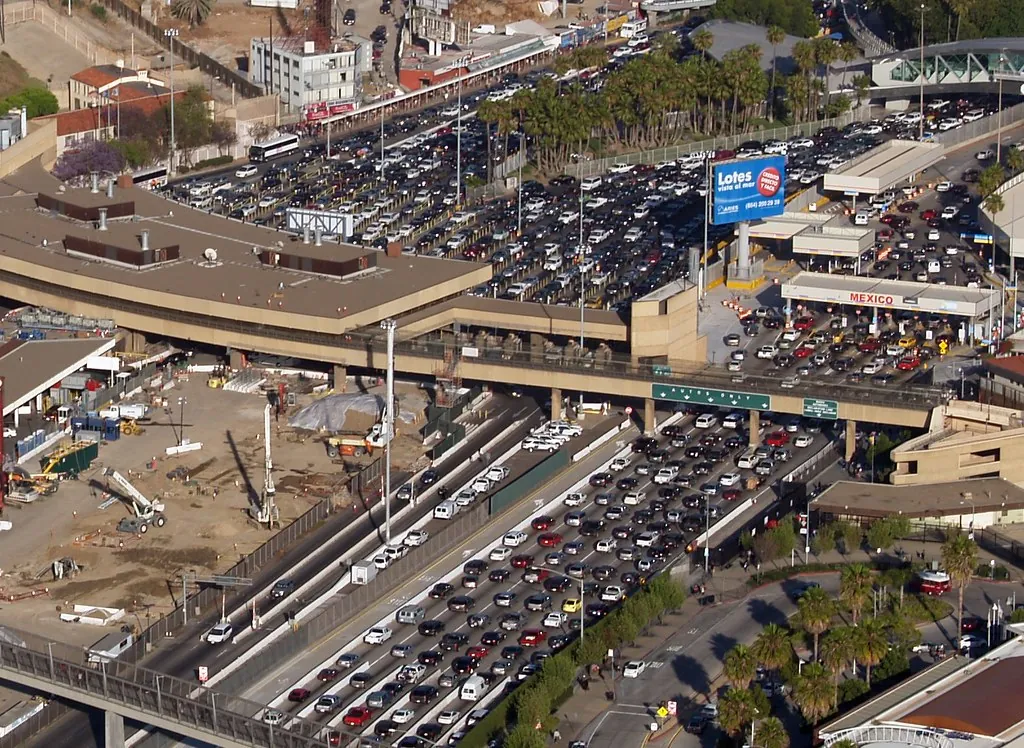
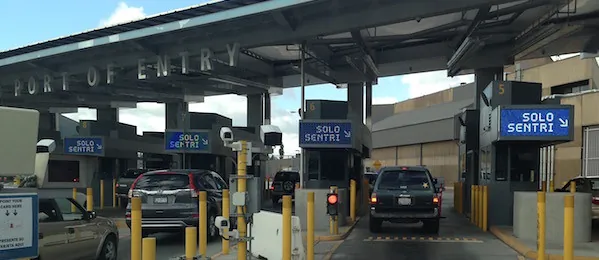
San Ysidro has two pedestrian crossings, and CBP runs the US side of both.
- The main crossing (PedEast): right by the transit center. CBP lists it as open 24 hours a day.
- PedWest: on the west side of the port, with limited hours. CBP lists northbound PedWest as 6 a.m. to 2 p.m. CBP has announced southbound PedWest hours of 3 p.m. to 11 p.m., but check before you go.
4. Get your Mexico FMM permit
Mexico’s National Migration Institute (INM) issues the FMM, short for Forma Migratoria Multiple. INM lets visitors entering by land apply online, print the form and show it with their passport or passport card when entering Mexico.
INM says an FMM is valid for up to 180 days and for a single entry. The State Department’s Mexico page says all land travelers must apply for an FMM, online or at an INM office, even if they stay within about 12 miles (20 kilometers) of the border.
Tip: fees and short-visit rules can change. Check the official INM site at inm.gob.mx before you go, and apply on the government site, not a look-alike.
INM also notes that a US passport card works for land crossings and the border zone only. It can’t take you into Mexico’s interior or onto an international flight.
5. Check wait times before you head back
The walk south is usually quick. The walk north is a line, and the line has opinions. CBP’s Border Wait Times site and app show current pedestrian waits for San Ysidro, PedWest and the number of lanes open.
CBP updates those times hourly. Check before you leave lunch, not after. Bring water, a charged phone and the patience of someone waiting for a table at a famous taco shop.
6. Bring the right documents to re-enter the US
This is the step that decides whether you get home tonight. Pack these before you get on the trolley.
- US citizens, adults: CBP lists a US passport, passport card, Enhanced Driver’s License or a Trusted Traveler card (NEXUS, SENTRI or FAST). These are the documents that meet the Western Hemisphere Travel Initiative (WHTI).
- US citizen children under 16: CBP says a birth certificate or other proof of citizenship. An original, a photocopy or a certified copy works.
- Everyone else: non-citizens follow their own rules for visas, green cards and I-94 records. Check CBP’s site before you cross, because leaving the US can affect your status or paperwork.
A regular driver’s license is not on CBP’s list for adult citizens. Leave it in your wallet for the bar, not the booth.
7. Know what not to bring back
CBP inspects what you carry north, and the rules are stricter than most people expect.
- Fruits and vegetables: CBP says it’s best not to bring fresh produce into the US.
- Meat: fresh, dried or canned meat and meat products are not allowed from most foreign countries. That includes many foods made with meat.
- Medicine: CBP says it’s illegal in most cases for US citizens to bring drugs bought abroad into the US for personal use. Non-citizens should carry a valid prescription or doctor’s note in English, and CBP suggests no more than a 90-day supply.
- Counterfeits: fake designer goods can be seized.
- Alcohol: limits come from the state where you enter, so check California’s rules.
Declare every agricultural item, even a single orange. CBP says first-time offenders who fail to declare face a $300 civil penalty.
FAQ: how to walk across the border to tijuana
Can I walk across the border to Tijuana with a passport card?
Yes, for land crossings. INM accepts the passport card for land entry and the border zone, and CBP accepts it for re-entry.
Do I need an FMM for a day trip to Tijuana?
The State Department says all land travelers must apply for one, even within about 12 miles of the border. Check INM’s site for current rules and fees.
How long is the wait to walk back from Tijuana?
It changes all day. Check CBP’s Border Wait Times site or app before you get in line.
Is the San Ysidro pedestrian crossing open 24 hours?
CBP lists the main pedestrian crossing as open 24 hours a day. PedWest has limited hours.
Is Tijuana safe to visit?
Read the State Department’s Mexico Travel Advisory and its Baja California section before you go. Follow its guidance on taxis, night travel and not traveling alone.
The verdict
Walking across the border to Tijuana is simple if you do the homework first. Read the State Department advisory, get your FMM from INM, and carry a passport or passport card. Take the Blue Line with a PRONTO card so your fares cap at $7. Then check CBP wait times before you head north. For more on getting around without wheels, see do you need a car in San Diego?.
Plan the rest of your day
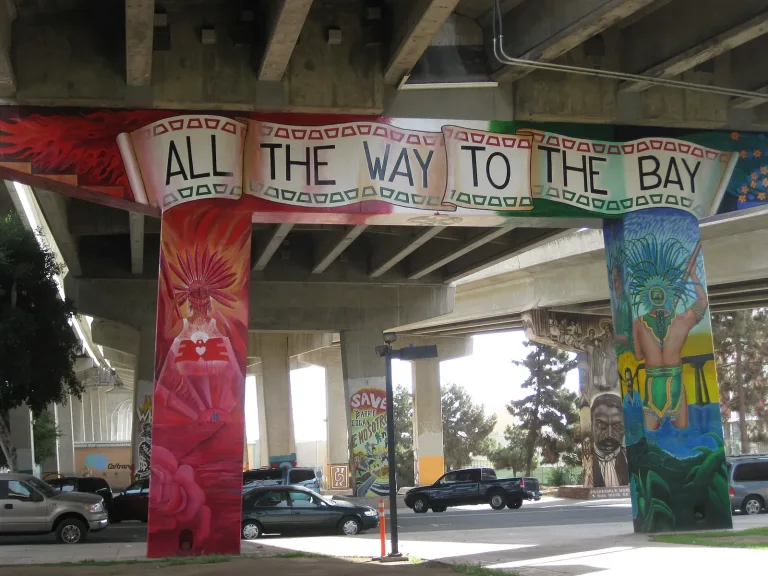
Right on the Blue Line, an easy stop on the ride back.
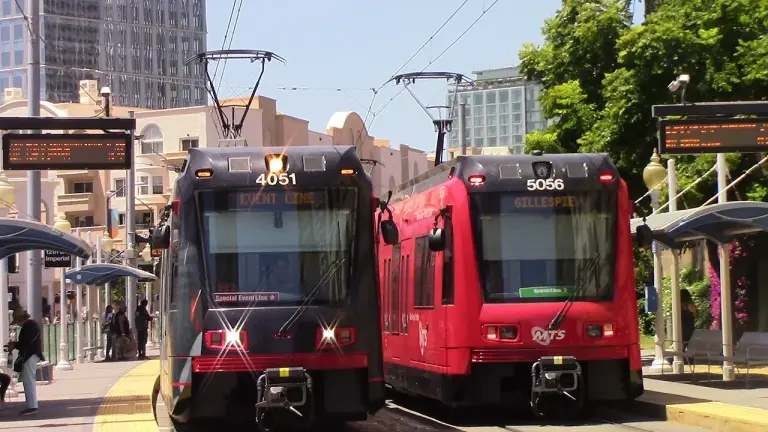
Photo: Officer Phil, CC BY 2.0, via Flickr