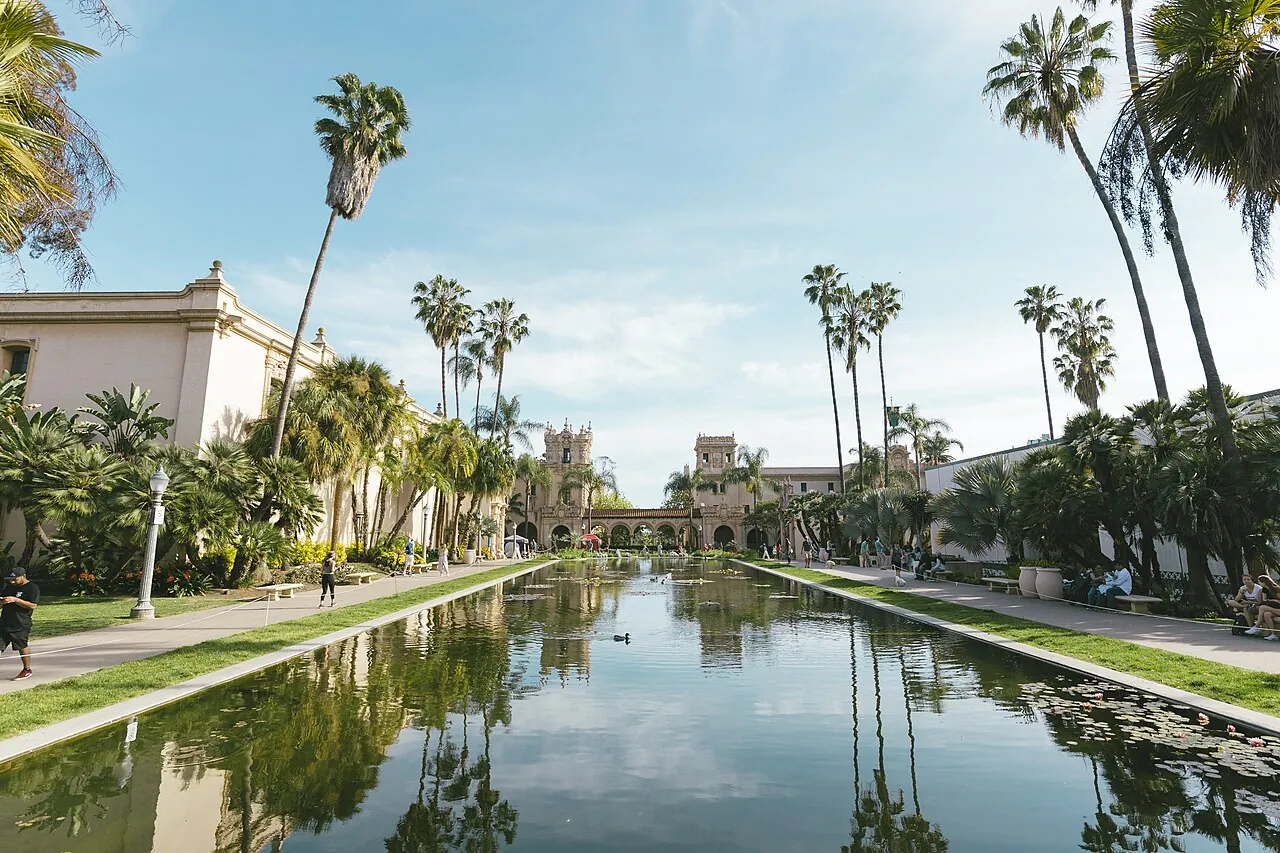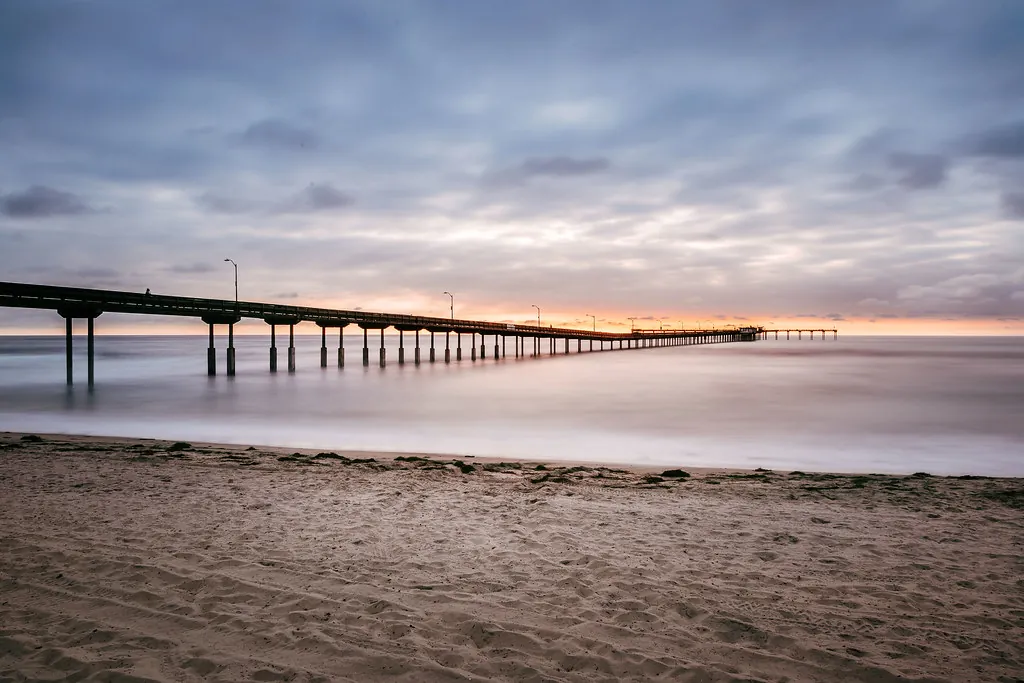
San Diego is a sprawling county pretending to be a beach town. The airport is next to downtown, but the best tacos, tide pools and sunsets are scattered across 30-plus miles of coast and canyon.
So, do you need a car in San Diego? Sometimes yes, often no, and occasionally it will cost you more to park than to eat. We’ll break down the trolley, buses, rideshare, scooters and parking, then give you a straight verdict based on your trip style.
TL;DR (for people with a reservation in 10 minutes)
- Staying downtown, Little Italy or near a trolley stop for a short trip? Skip the car. The trolley, the $3 airport bus and rideshare cover it.
- Planning La Jolla, North County, Julian, wineries or multiple beaches? Rent a car, at least for those days.
- Best combo for most visitors: go car-free for the first days, then rent for 1 or 2 day-trip days. Your wallet and your patience will thank you.
Quick facts
- Trolley fare $3 one way, capped at $7 a day with PRONTO (as of Oct 1, 2026).
- Airport bus Route 992 to downtown every 15 minutes, standard $3 fare.
- Coronado ferry About $9 each way from Broadway Pier, check before you go.
- Parking Downtown meters about $2.50 an hour; city beach lots free for now.
- Best for Car-free downtown stays, plus a rental for day-trip days.
The trolley: cheap, clean-ish, and surprisingly useful
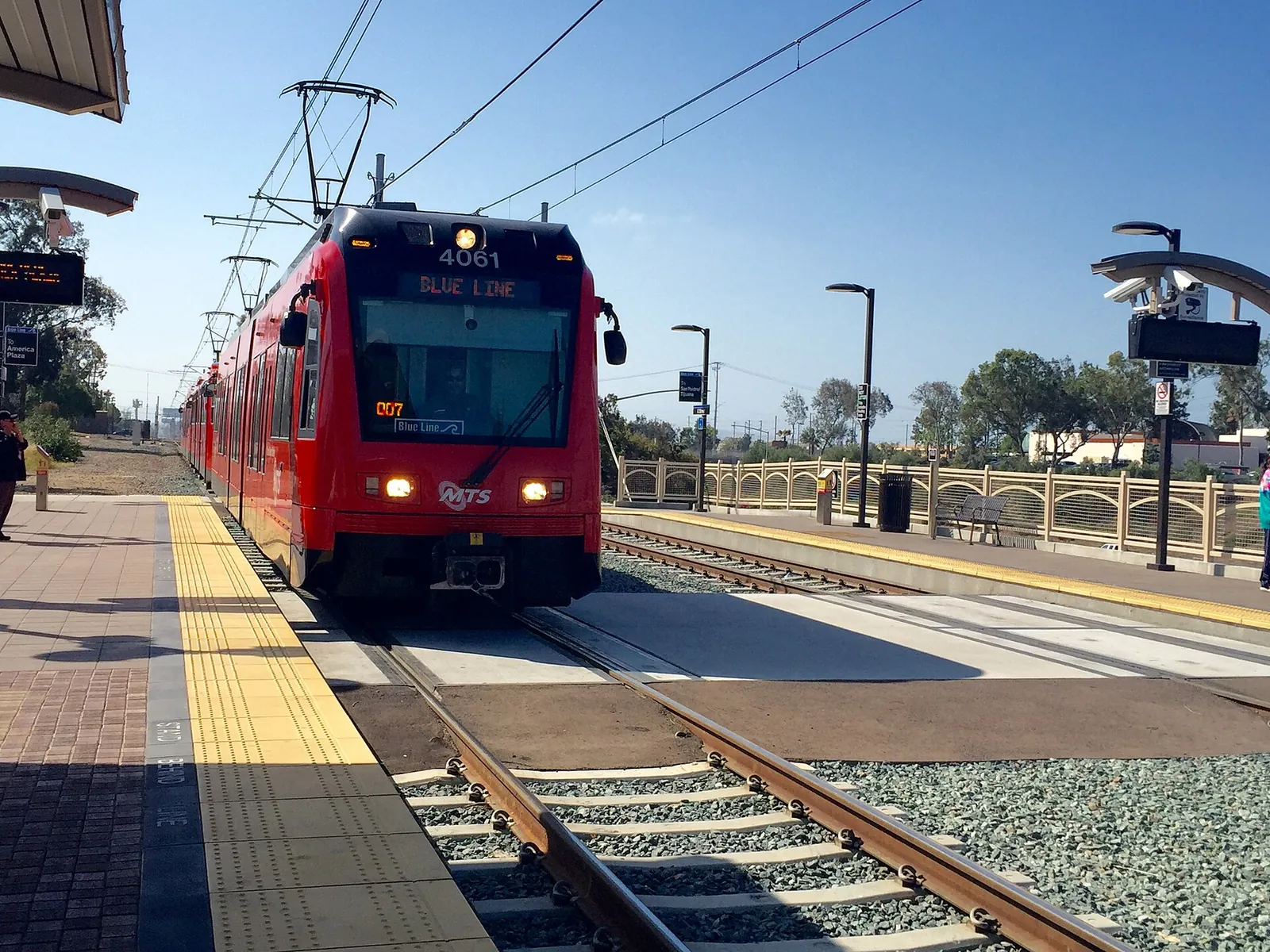
The San Diego Trolley is light rail, not a cable car, so please don’t wait for a bell and a Rice-A-Roni jingle. It runs four everyday lines: Blue, Orange, Green and Copper (plus a vintage Silver Line on select holidays).
The ones visitors use most:
- UC San Diego Blue Line: downtown, Old Town, UTC and the La Jolla area (the campus side, not the beach), plus south to the border at San Ysidro.
- Green Line: Old Town, Fashion Valley, SDSU, and the Gaslamp near Petco Park.
- Orange Line: downtown east toward El Cajon, with stops by the Convention Center.
Trains generally run from about 5 a.m. to around midnight, often every 15 minutes, more often on busy parts of the Blue Line. Late at night, gaps can stretch to 30 minutes, so check the schedule before you order dessert.
Fares: As of October 1, 2026, a one-way adult ride is $3 and includes 2 hours of transfers when you pay with PRONTO or a contactless card. With PRONTO, daily fares cap at $7, so ride all day and you stop getting charged. Contactless taps don’t get that cap, so each new ride after 2 hours costs another $3. Kids 18 and under ride free with a Youth PRONTO account or card. Fares are set to change again in 2027, so check before you go.
Tip: For a ride or two, skip the ticket machine and tap your contactless credit card or phone at the validator. Riding all day? Use the free PRONTO app or a PRONTO card so the $7 cap kicks in. Tap every time you board, or the fare inspector gets the last word.
Buses: slower, but they go where the trolley doesn’t
MTS buses fill the gaps, including the beach neighborhoods the trolley skips. Route 30, for example, links Old Town with Pacific Beach and La Jolla. The fare system is the same as the trolley, so your transfers and daily cap carry over.
Buses are fine for a single beach day, and they come with free people-watching. They get old fast if you’re trying to hit Ocean Beach, La Jolla and a brewery in one afternoon, because San Diego bus routes love a scenic detour.
Airport to downtown: the easiest part of your trip
San Diego International Airport sits about 3 miles from downtown, so close you can practically wave at your hotel from the runway. You have 4 easy options:
- MTS Route 992: runs between both terminals and downtown (including Santa Fe Depot) every 15 minutes, roughly 4:30 a.m. to 1 a.m. It costs the standard one-way fare ($3 as of October 2026). Tap a card on board.
- The free airport shuttle (SAN Flyer): an electric shuttle between Terminals 1 and 2 and Old Town Transit Center, timed to meet trolleys and trains. It’s free, which is the best price in this article.
- Rideshare or taxi: a short ride downtown, but surge pricing at peak arrival times can be dramatic. Follow airport signs to the ride-app pickup area.
- Rental car: rental counters are at a consolidated facility reached by a shuttle, so budget extra time on both ends.
Tip: If you’re staying downtown and not renting for a few days, Route 992 plus a short walk beats waiting in a rental line after a flight.
Rideshare: the “I’ll just Uber” plan
Rideshare works well for short hops: Little Italy to the Gaslamp, downtown to Balboa Park, a night out in North Park. It also solves the “who’s driving home from the brewery” problem, which in a city with this many breweries is a real planning issue.
It gets expensive for long trips. Surge pricing after a Padres game is how you learn the true meaning of the word “dynamic.” Downtown to La Jolla and back a few times, plus surge pricing around Padres games and concerts, can quietly add up to the cost of a rental. Do the math once before committing.
Bikes and scooters: fun, with fine print
Dockless e-scooters and e-bikes (Lime is the familiar name) are all over downtown, Mission Beach and Pacific Beach. They are perfect for the Embarcadero and Mission Bay paths.
The city uses geofencing, so scooters slow down automatically in busy zones, crawling as low as 3 mph (roughly the speed of a tourist reading a menu) along the Embarcadero and the Mission Beach and Pacific Beach boardwalk. You also can’t park them on beach boardwalks or around Petco Park. Wear a helmet, ride on the street or bike paths, and skip the sidewalks.
Tip: For Coronado, take the bike or scooter to Broadway Pier and hop the ferry (about $9 each way, check before you go), then ride the flat island streets.
Parking realities: where the car really costs you
This is where “having a car” turns into “managing a car.”
Downtown and the Gaslamp: Street meters run about $2.50 an hour, with enforcement stretching into the evening, including weekends. On Padres game and big-event days, meters near Petco Park can jump to as much as $10 an hour. Garages fill up on game nights, and hotel parking often costs more per night than a solid dinner, so ask your hotel for its nightly rate before you book. Your car does not need an ocean view.
Balboa Park: Parking in the park’s core lots is currently paid for non-residents, with rates that vary by lot. The city has agreed to remove paid parking starting January 1, 2027, so rules are in flux. Our Balboa Park parking guide breaks down every lot and the free hours. Or take a rideshare and skip the lot-circling entirely.
Beaches: City beach and Mission Bay lots are free right now, which sounds great until you meet a summer Saturday. By 10 a.m., lots at La Jolla Shores, Pacific Beach and Mission Beach fill fast, and you’ll be circling like a seagull eyeing a churro. The city has discussed charging out-of-town visitors at these lots in the future, so look for posted signs.
Tip: Read every parking sign twice. Street sweeping, time limits and color-coded curbs are enforced with enthusiasm, and a ticket is a souvenir nobody wants.
Do you need a car in San Diego for your trip? It depends on the style
You can skip the car if:
- You’re staying downtown, in Little Italy or near a trolley stop for 2 to 4 days.
- Your plan is the Gaslamp, Balboa Park, Old Town, the Embarcadero and a Coronado ferry ride.
- You’re in town for a convention, a Padres series or a cruise.
- You’re staying at a Mission Beach or Pacific Beach rental and happy to bike, walk and scooter.
You’ll want a car if:
- You want sunsets at Sunset Cliffs and the views from Mount Soledad on the same evening.
- You’re doing day trips to Julian, Temecula wineries, Anza-Borrego or North County beaches.
- You’re traveling with small kids, car seats, surfboards or a beach cart the size of a canoe.
- You want to hit several taco shops from our best tacos list in one tour. Those shops are spread out, and some are in neighborhoods buses barely reach.
- You’re staying in La Jolla or an inland neighborhood away from the trolley.
Middle ground: Rent for just the day-trip days. Many rental agencies have neighborhood and downtown locations, so you don’t have to pay hotel parking for days when the car just sits there.
FAQ: do you need a car in San Diego
Do you need a car in San Diego if you stay downtown?
For a short trip, usually not. Downtown, Little Italy and hotels near a trolley stop are covered by the trolley, the $3 airport bus and rideshare. Rent a car just for day trips to La Jolla, North County or the backcountry.
How much is the trolley in San Diego?
As of October 1, 2026, a one-way adult ride is $3, with 2 hours of transfers when you pay with PRONTO or a contactless card. Daily fares cap at $7 with PRONTO only, not with contactless taps. Kids 18 and under ride free with a Youth PRONTO account or card. Fares are set to change again in 2027, so check before you go.
Does the San Diego trolley go to La Jolla?
Sort of. The UC San Diego Blue Line reaches UTC and the campus side of La Jolla, not the beach. For the coast, bus Route 30 links Old Town with Pacific Beach and La Jolla.
How do you get from San Diego airport to downtown?
MTS Route 992 runs from both terminals to downtown every 15 minutes for the standard $3 fare. The free SAN Flyer shuttle goes to Old Town Transit Center for trolleys and trains, and rideshare is a short ride when surge pricing behaves.
Is parking free at San Diego beaches?
City beach and Mission Bay lots are free right now, but on summer Saturdays the lots at La Jolla Shores, Pacific Beach and Mission Beach fill fast by 10 a.m. The city has discussed charging out-of-town visitors in the future, so look for posted signs.
The verdict
For most short trips based downtown, you don’t need a car in San Diego: the trolley, the airport bus, rideshare and scooters handle it for less money than a week of hotel parking. If your plans lean toward La Jolla, the backcountry, North County or lots of beach-hopping, rent one, ideally just for those days. Be honest about your itinerary, and let the car earn its parking spot.
Plan the rest of your trip
Photo: Vmzp85, CC BY-SA 4.0, via Wikimedia Commons